Willy Wonka 2023 – Glasgow Warehouse Disaster
What Was the Willy Wonka 2023 Event?
The Willy Wonka experience refers to an unlicensed event held in Glasgow, Scotland, in February 2024, organized by a company called House of Illuminati. Marketed as an immersive family experience inspired by Roald Dahl’s Charlie and the Chocolate Factory, the event promised visitors a magical journey through a Willy Wonka-themed universe. Tickets sold for up to £35 per person, with promotional materials describing “stunning and intricately designed environments” and “delightful treats” awaiting attendees.
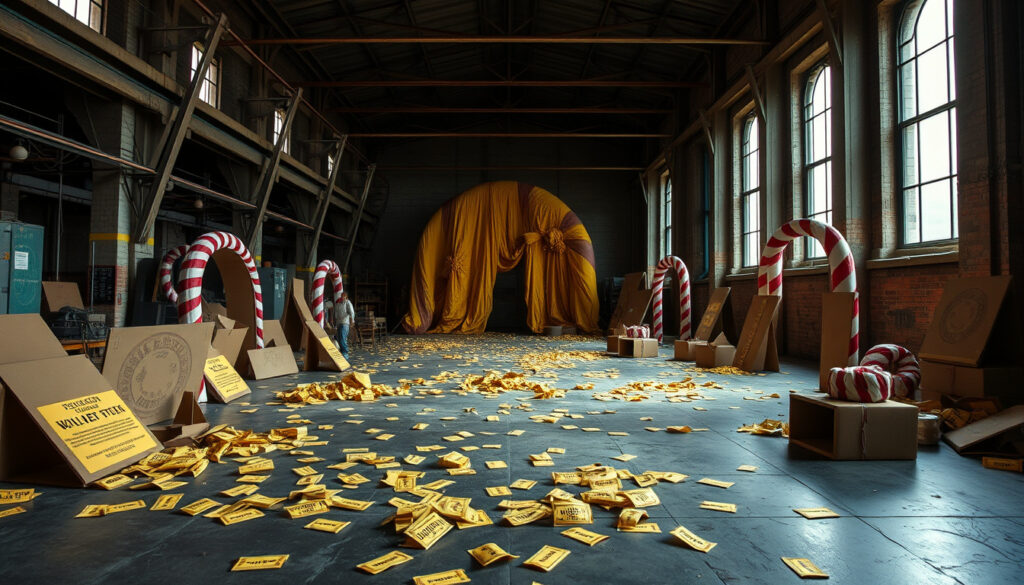
The event took place at Box Hub Warehouse in Whiteinch, Glasgow, over the weekend of February 24–25, 2024. What guests encountered upon arrival bore no resemblance to the enchanted chocolate factory depicted in promotional images. Instead of elaborate sets and towering candy sculptures, visitors found themselves in what was described as an abandoned, empty warehouse with dirty windows, exposed air conditioning units, and scattered props placed directly on concrete floors.
The organizer, House of Illuminati, is registered to Billy Coull. According to available sources, Coull had previously faced scrutiny over questionable activities in the charity sector, including false claims about events and an alleged fraudulent doctorate. These prior concerns would later resurface in public discussions following the event’s failure.
February 2024
Glasgow, Scotland
House of Illuminati
Viral failure, shutdown
Key Facts About the Event
- Over 1,000 tickets sold at £35 each, generating significant revenue expectations
- Marketing featured AI-generated images with spelling errors such as “cartchy tuns” and “a pasadise of sweet teats”
- The venue contained only a small bouncy castle and AI background images on walls
- Children received just two jelly beans and a quarter cup of lemonade
- Police were called to the venue following visitor complaints
- The event was cancelled the same day it opened to the public
Why Was the Willy Wonka Experience a Failure?
The gap between marketing promises and actual delivery formed the core of the event’s failure. Promotional materials showcased AI-generated images of grand chocolate tunnels, rivers of candy, and whimsical candy gardens. In reality, the warehouse contained minimal decorations, with props placed haphazardly on concrete floors under fluorescent lighting.
Actors wore inexpensive costumes and recited AI-generated scripts during early performances. After the initial shows, even this limited entertainment was abandoned entirely. Guests were simply allowed to walk through the warehouse in approximately two minutes, according to multiple accounts. When the venue ran out of supplies, children received reduced portions or nothing at all.
What Visitors Actually Found Inside
Inside the warehouse, the atmosphere differed dramatically from what families had anticipated based on promotional content. The space featured exposed industrial infrastructure, inadequate lighting, and basic decorations that bore no connection to the magical chocolate factory world promised in advertisements.
Footage and photographs of the empty warehouse circulated widely across social media platforms, spawning countless memes and comparisons to the infamous Fyre Festival disaster.
Parents who had traveled for hours with their children found themselves facing crying kids and a venue that offered no compensation or explanation. Visitors described the experience as an “absolute con” and immediately demanded refunds. Some families arrived to find the venue already closed without warning.
The Role of AI in Marketing Materials
The event’s promotional campaign relied heavily on artificial intelligence to generate its marketing images. These AI-created visuals depicted fantasy environments including chocolate rivers, elaborate candy sculptures, and whimsical decorations that simply did not exist at the venue.
The disconnect between computer-generated imagery and the actual warehouse space became a central point of criticism. Several promotional images contained obvious errors, including misspelled phrases that suggested hasty or automated content generation without proper review.
What Happened After the Willy Wonka Event?
Following the event’s collapse, Billy Coull offered refunds to approximately 850 ticket holders through a Facebook post. Reports indicate that some attendees did receive their money back, though the completeness of the refund process remains unclear based on available information.
Box Hub, the warehouse venue, issued an apology on behalf of House of Illuminati and offered free use of their space as compensation for affected families. Days after the event, Coull deleted his LinkedIn, YouTube, and business website accounts. Employees working at the event reportedly received only half of their promised wages.
Police Involvement and Official Response
Police were contacted by multiple attendees seeking immediate refunds after discovering the venue did not match its promotional materials. While officers were involved at the scene, available sources do not indicate a formal police shutdown of the event. The cancellation appears to have been initiated by organizers following the public backlash rather than through official enforcement action.
Organizer’s Public Statements
In interviews with The Sunday Times, Billy Coull expressed remorse and stated that he accepted responsibility for the outcome. However, public sentiment in Glasgow proved harsh, with Coull becoming widely described as “one of the most disliked people in Glasgow.” House of Illuminati announced it would not organize any future events following the incident.
The event has been frequently compared to the Fyre Festival, another highly publicized event that promised luxury experiences but delivered far less than advertised.
How Did the Willy Wonka Fiasco Go Viral?
Social media played a crucial role in amplifying the event’s failure. Attendees posted photographs and videos of the empty warehouse almost immediately after their visits, generating widespread ridicule online. The contrast between promotional images and reality proved irresistible to internet users.
Global meme culture embraced the incident, with the empty warehouse becoming a symbol of false advertising and failed experiential marketing. Hashtags related to the event trended across multiple platforms, bringing international attention to what had begun as a local family outing.
User Testimonials and Community Reaction
Families who attended the event shared detailed accounts of their disappointment. Several parents reported traveling significant distances, with some driving for hours hoping to create memorable experiences for their children. The resulting backlash reflected not just financial loss but the shattered expectations of young fans who had anticipated a magical encounter with the world of Willy Wonka.
The incident sparked broader conversations about event marketing regulations and the responsibility of organizers to deliver promised experiences. Industry observers noted that the use of AI-generated imagery in promotional materials raised questions about disclosure requirements and consumer protection standards.
Timeline of Events
Understanding the sequence of events helps contextualize how a planned family experience transformed into an international cautionary tale. The following timeline outlines key moments from ticket sales through the aftermath.
- January 2024: Tickets for the Willy Wonka experience go on sale, priced at up to £35 per person
- February 24, 2024: The event opens to visitors; complaints begin almost immediately
- February 25, 2024: Police called to venue; event cancelled; widespread complaints from attendees
- Immediately after: Billy Coull offers refunds to 850 ticket holders via Facebook
- Short time after: Box Hub issues apology and offers free venue access as compensation
- Days later: Coull deletes LinkedIn, YouTube, and business website; performers receive only half wages
- Following weeks: Event goes viral on social media; memes spread globally; media coverage expands
What Is Confirmed and What Remains Unclear
Available sources provide substantial information about the event’s basic facts and immediate aftermath. However, several aspects remain less certain or unconfirmed by official sources.
| Established Information | Uncertain or Unclear |
|---|---|
| Event held February 24–25, 2024, in Glasgow | Complete status of refund process |
| Organized by House of Illuminati / Billy Coull | Whether formal legal charges were filed |
| Event cancelled same day it opened | Current civil litigation status |
| Police contacted by attendees | Total number of affected families |
| Viral social media reaction | Details of Coull’s prior charity sector issues |
| Warehouse venue in Whiteinch, Glasgow | Regulatory actions taken against organizers |
The Event in Context
The Willy Wonka experience emerged during a period of growing interest in immersive themed events and experiential entertainment. Families increasingly seek interactive experiences that bring fictional worlds to life, driving demand for carefully produced activations inspired by beloved stories and characters.
However, the Glasgow incident highlighted the risks inherent in events that rely heavily on digital marketing without corresponding physical investments. The rapid spread of AI-generated imagery has made it easier to create compelling promotional materials, but also easier to promise experiences that cannot be delivered at reasonable cost.
The event also demonstrated the power of social media to hold organizers accountable. In previous eras, disappointed attendees might have shared their experiences with limited audiences. Modern platforms enable instant documentation and global distribution of evidence, transforming isolated complaints into viral phenomena that generate sustained public attention.
Sources and Statements
Multiple sources have documented various aspects of the Willy Wonka experience failure. Official statements came primarily through social media posts and subsequent media interviews rather than formal press releases or legal filings.
Billy Coull expressed remorse in interviews, stating that he accepted responsibility for what unfolded. However, these statements came after significant public backlash had already damaged the event’s reputation and left many families out of pocket.
Box Hub issued an apology on behalf of House of Illuminati and offered free venue access as compensation, though this gesture was viewed by many as insufficient given the scale of disappointment experienced by attendees.
Summary
The Willy Wonka experience in Glasgow, held in February 2024, stands as a cautionary example of the gap between digital marketing promises and physical event delivery. Organized by House of Illuminati under Billy Coull’s registration, the event sold over 1,000 tickets at £35 each, promising an immersive chocolate factory adventure. Instead, attendees found an abandoned warehouse with minimal decorations, where children received only jelly beans and small portions of lemonade.
Police were contacted by furious families demanding refunds. The event was cancelled the same day, and the incident quickly went viral on social media, spawning memes and comparisons to the Fyre Festival. While Coull offered refunds to 850 ticket holders and issued public apologies, significant questions remain about the completeness of compensation and any lasting legal consequences. House of Illuminati announced it would not organize future events. The case continues to influence discussions about event marketing regulations and consumer protection in the experiential entertainment industry. For similar discussions about storytelling gone wrong, see Tor Åge Bringsværd – Biografi, bøker og arv.
Frequently Asked Questions
Is the Willy Wonka experience connected to the movie?
No. The Glasgow event was not officially licensed by Warner Bros. or any entity holding rights to Roald Dahl’s characters. It operated as an unauthorized themed experience.
Where exactly was the event held?
The event took place at Box Hub Warehouse in Whiteinch, Glasgow, Scotland. The venue is an industrial space that proved unsuitable for the family-friendly experience that was promised.
How much did tickets cost?
Tickets were priced at up to £35 per person. With over 1,000 tickets sold, the total revenue from ticket sales represented a significant sum before refunds were offered.
Were refunds actually issued?
Billy Coull offered refunds to approximately 850 ticket holders through a Facebook post following the event. Reports indicate some attendees received their money back, though it remains unclear whether all affected parties were fully compensated.
What happened to the performers hired for the event?
According to available reports, performers and staff working at the event received only half of their promised wages. This adds to the list of parties who suffered financial harm from the incident.
Did anyone face legal consequences?
Police were contacted by attendees, but available sources do not detail any formal legal charges or prosecutions resulting from the event. The full extent of any legal proceedings remains unclear based on publicly available information.
Will similar events be organized in the future?
House of Illuminati announced it would not organize any future events following the incident. However, the broader market for immersive themed experiences continues to grow, raising questions about regulatory oversight.
What can event organizers learn from this case?
The incident highlights the importance of delivering promised experiences and maintaining transparency with attendees. The rapid viral spread of evidence through social media means that disappointing events face immediate and widespread scrutiny.
Flere relaterte innlegg
 All Inclusive Reiser – Beste Tilbud og Destinasjoner
 Når åpner TusenFryd 2026? Sesongstart, priser og tips
 Fulldempet sykkel junior: Beste modeller og tips
 Hva er Temu? – risiko, toll og tips for trygg handel
 Skruf Super White Fresh S4 – Styrke, nikotin og pris | Guide
 Iselin Guttormsen kjæreste: Forlovet med Catalin Mihu
 T20 World Cup 2026: vertskap, lag og sending
 AutoPASS logg inn – slik får du tilgang